Where to have lunch in Montmartre without getting it wrong
Published on
The Butte is beautiful, but eating well there can be a challenge: tourist-trap terraces, fixed menus, steep bills. This guide helps you spot a real midday table in Montmartre — the tell-tale signs, the neighbourhoods to aim for, and what turns a forgettable meal into a genuinely good lunch break.
The essentials
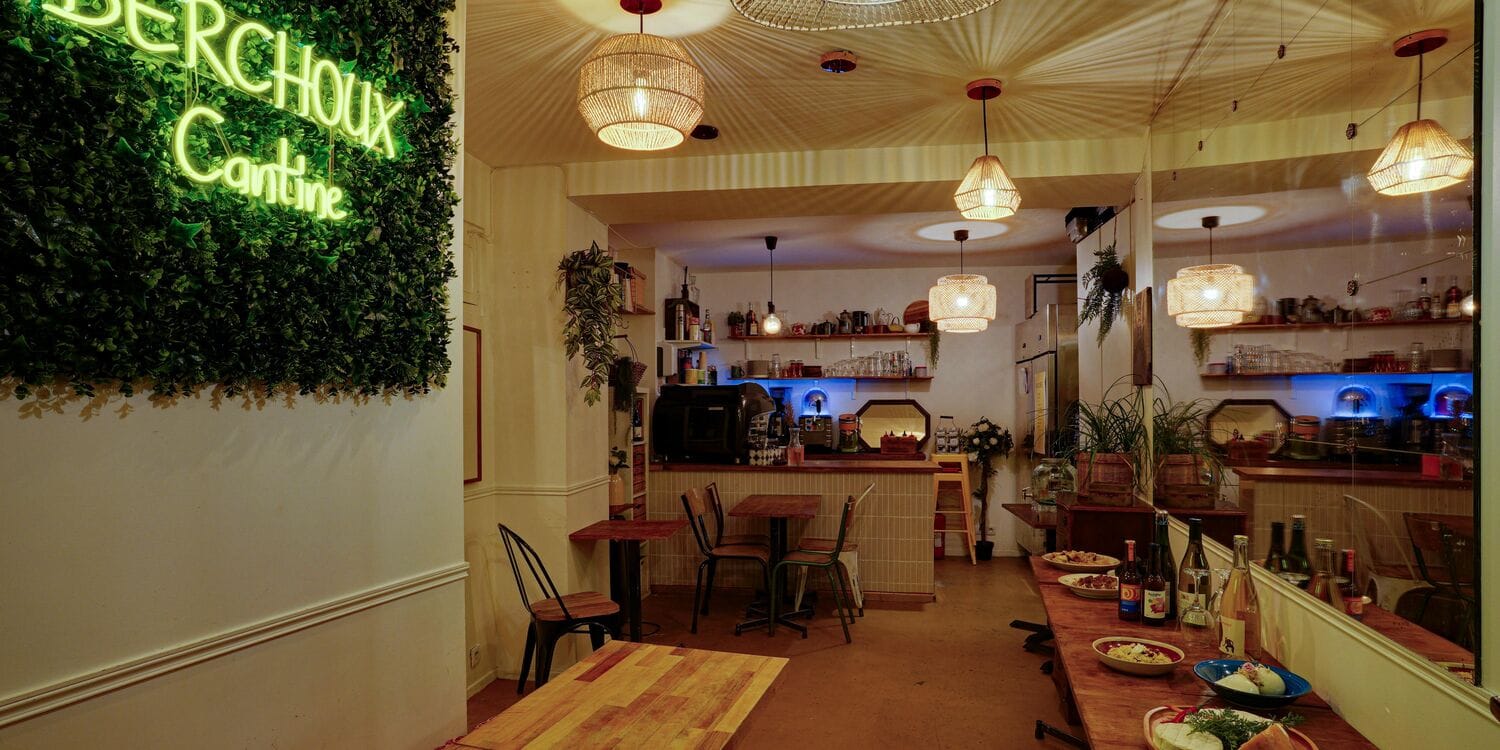
To have lunch well in Montmartre, step away from the big terraces around the Sacré-Cœur and place du Tertre, and look to the streets on the north slope of the Butte, near Abbesses, Lamarck-Caulaincourt and Jules Joffrin. A good midday table shows a few reliable signs: a changing chalkboard, a short menu, home cooking that is seasonal, and a room with as many locals as visitors. Rely on midday formats — bowls, dish of the day, generous sandwiches, eat in or takeaway — to eat well and fast. That's exactly the spirit of Berchoux, the 18th's market canteen, minutes from Abbesses.
Montmartre at lunchtime
Montmartre runs at two speeds. There's the postcard Butte — the funicular, the Sacré-Cœur steps, the portrait artists of place du Tertre — and there's the village of sloping streets and neighbourhood shops where the same faces meet at noon. Knowing where to have lunch in Montmartre starts with that double geography: the very touristy south slope concentrates the visible terraces; the quieter north slope keeps a local life and, with it, its best midday tables.
At lunchtime, the crowd drifts slowly from the viewpoints toward the shopping streets. It's the ideal moment to move a few hundred metres from the major sites: visitor density drops fast, prices become reasonable again, and you find places made for those who live and work on the hill. A good lunch break in Montmartre is often won by turning right where most keep going straight.
The area also has a history of the table. Long a village of open-air cafés and artists' studios, Montmartre kept a taste for simple, generous cooking shared between neighbours. That heritage, more than the tourist neon, is what to look for when choosing where to eat at midday: neighbourhood cooking, without fuss, that makes you want to come back.
Avoiding tourist traps
Some parts of Montmartre are full of restaurants built for a passing customer you'll never see again. You spot them by a few signs: an endless menu translated into five languages, photos of dishes on the card, a waiter calling passers-by from the terrace, and a spot right on the coach route. The odds of eating badly climb sharply there.
A very long menu is the first red flag. A kitchen offering thirty dishes can't make it all fresh or home-made; it relies on frozen produce and food kept warm. A short menu, often chalked up and changed day to day, points to a kitchen that works with the market. Less choice, but better: almost always the right bet at midday.
Be wary of location for location's sake, too. A south-facing terrace with a monument view is paid for — in the bill and on the plate. The best midday tables are often on a view-less street, away from the flow. The small detour is the price of a real lunch, and it almost always pays off.
How to spot a good midday table
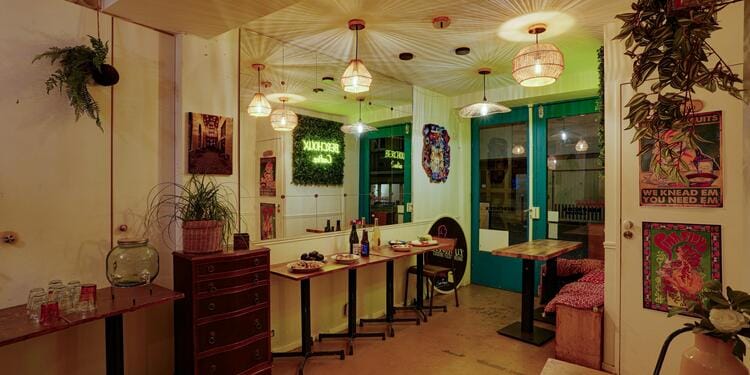
Once the big terraces are ruled out, how do you find the right place? First, look at who's eating. A room with locals, artisans and regulars who greet the kitchen is a far better signal than a queue of visitors outside a photogenic window. At midday, locals vote with their feet, and they're rarely wrong.
Then look for the daily chalkboard. A changing dish of the day, a short hand-written set menu, an owned 'home-made' label: these mark a living kitchen, tied to the morning market rather than a fixed stock. An identical menu week after week says the opposite. Rotation guarantees freshness and often creativity.
Finally, trust the welcome and the tempo. A good midday table knows lunch takes an hour: service is quick without being rushed, you're seated without fuss and served well. A place that names its baker and producers deserves a stop — small details that reveal an honest relationship with the guest.
The forms of lunch in Montmartre
Lunch on the Butte isn't only a two-hour sit-down. Depending on your time and mood, several formats coexist — and the best addresses often play on more than one.
The seasonal bowl
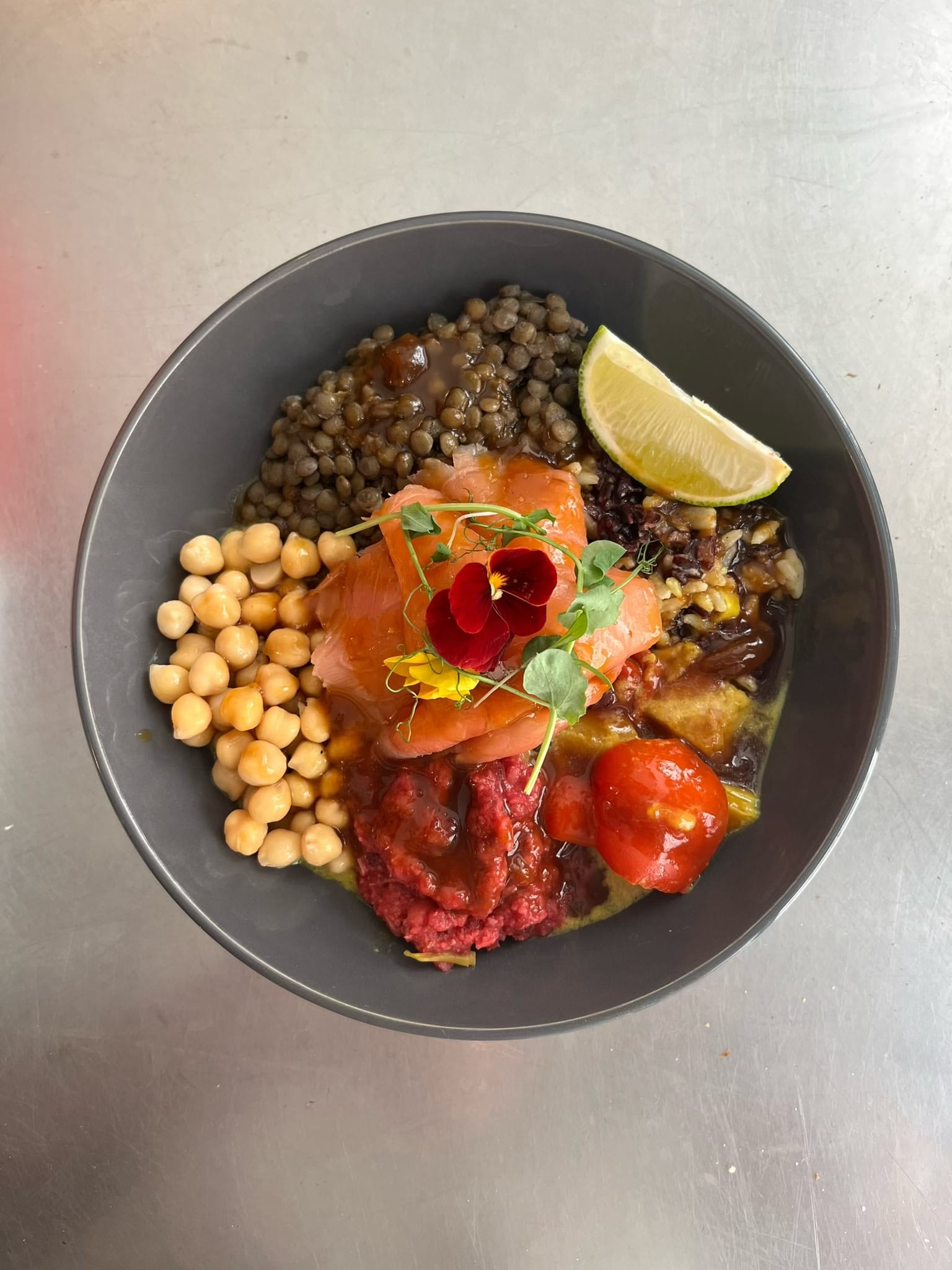
Generous and balanced — grains, pulses, market vegetables, a protein — the composed bowl is the midday format par excellence: filling, quick to serve, easy to take away and eat with a rooftop view.
The dish of the day
The most revealing option: a single dish, cooked in the morning, that changes each midday. This is where a table shows what it can do with the day's produce.
The good sandwich
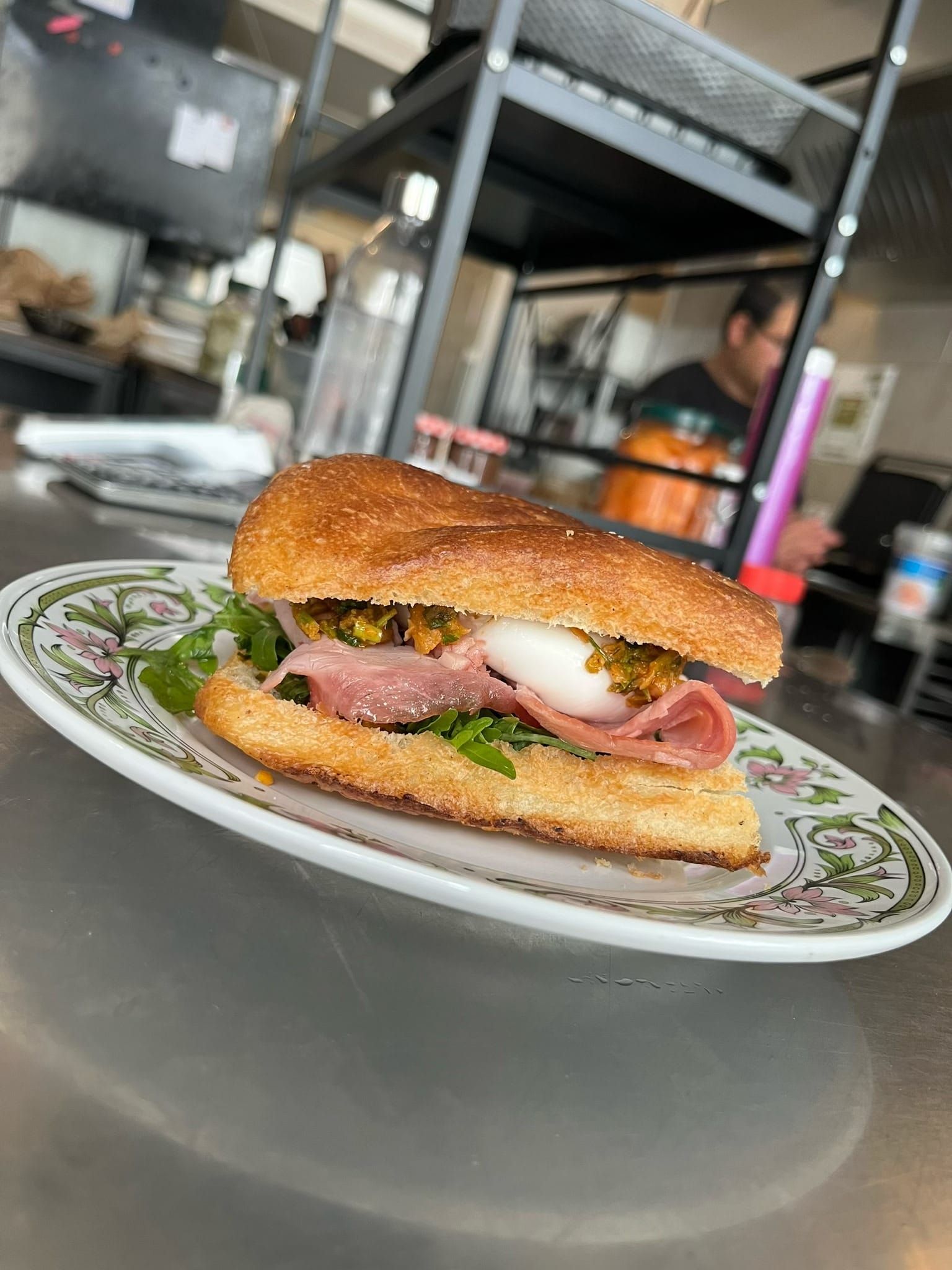
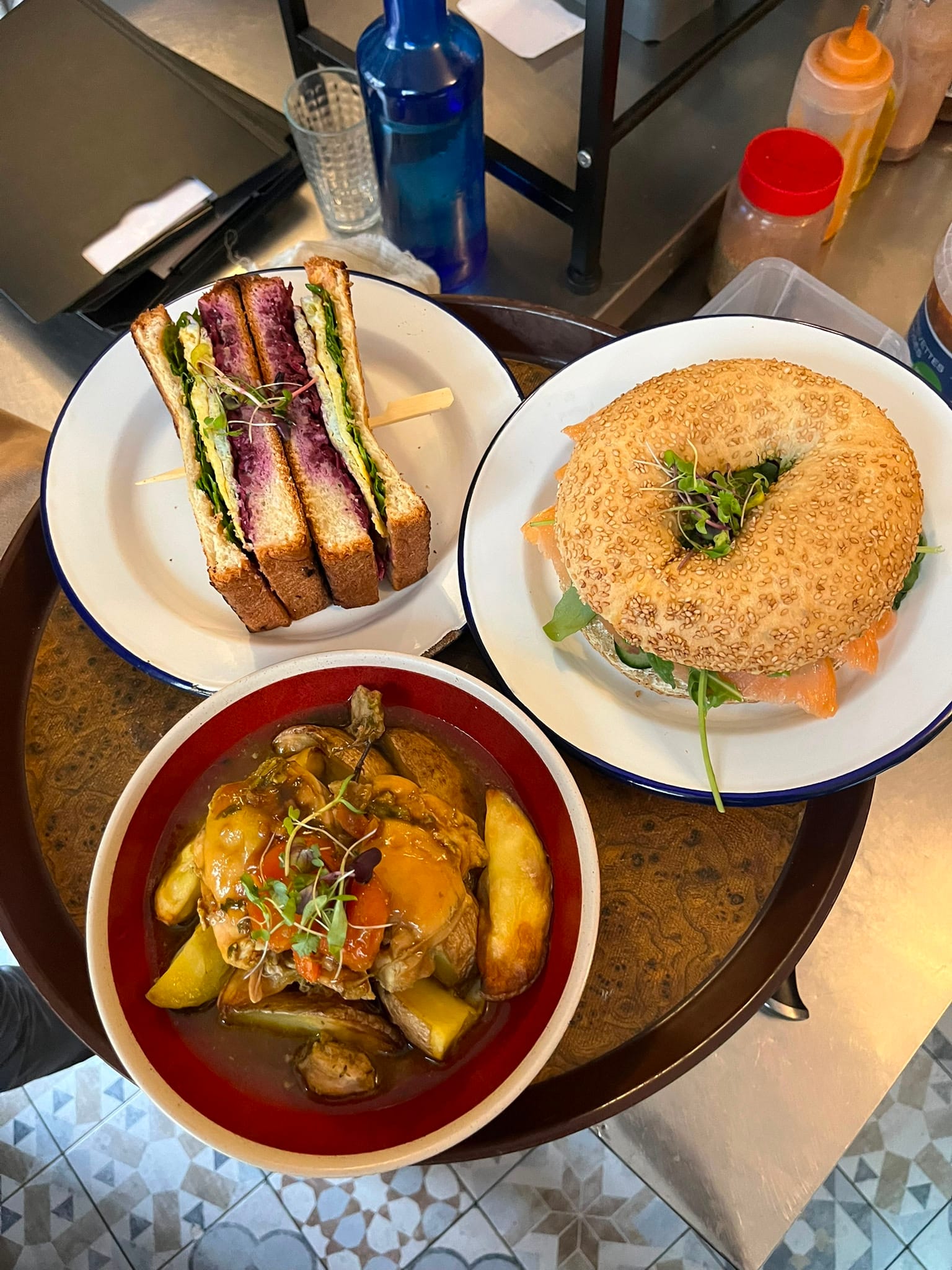
Far from soft industrial bread, a good midday sandwich is built on quality bread with fresh fillings. Perfect for lunch on the go between two lanes, without losing flavour.
The sharing plate
For a more relaxed lunch, a few plates in the middle of the table stretch the meal and let everyone taste. A convivial format, very much in Montmartre's village spirit.
Eating seasonal and home-made
The real marker of a good lunch in Montmartre isn't the décor or the view: it's what's on the plate and where it comes from. A market kitchen starts from the morning's deliveries and builds accordingly — vegetables at their peak, dishes that follow the seasons, a freshness no fixed menu can offer. At midday, you taste that difference on the first forkful.
Home cooking changes everything, for flavour and digestion. A dish cooked on site that morning is nothing like a reheated one out of a box: less salt and fewer additives, more taste, a plate that fills you without weighing you down. It's also a guarantee of traceability — you know who cooked, with what, often with specialty bread from a neighbouring baker.
This approach has a quieter merit too: it's virtuous. Cooking what the market offers and adjusting quantities day to day cuts waste, uses the whole produce and supports local growers. Eating well on the Butte is, without quite thinking about it, a slightly more responsible choice than industrial catering.
Where to have lunch in Montmartre, area by area
The Butte isn't one homogenous block: each micro-area has its atmosphere and its midday offer. Here's where to head, depending on the mood you're after.
Abbesses
The lively, bohemian heart of Montmartre. Pedestrian streets, neighbourhood cafés and small tables: an excellent starting point to lunch without going full-tourist.
Lamarck-Caulaincourt
More residential and low-key, on the north slope. You'll find places favoured by locals, away from the flow, ideal for a quiet lunch.
Jules Joffrin & Fontaine du But
The everyday Montmartre of shops and neighbourhood canteens. Here, on rue de la Fontaine du But, the Butte lunches like a village.
Around Tertre & Sacré-Cœur
The most touristy zone: lovely to visit, riskier for lunch. If you're there, move a few streets away to find honest prices and cooking.
Plant-based and flexitarian lunch
Lunch has changed a lot, and Montmartre follows: more tables put vegetables at the centre of the plate, with meat and fish alongside rather than as the star. This flexitarian cooking ticks every box of a good midday meal: light yet filling, colourful, rich in seasonal vegetables, pulses and grains. You leave the table without an afternoon slump.
A flexitarian address also means flexibility. Everyone builds the lunch that suits them: fully plant-based for some, with an animal protein for others, without turning the meal into a puzzle. For a group with varied tastes and diets — common when visiting Montmartre together — it's often the simplest, most consensual solution.
At Berchoux, this guides the midday menu: vegetables take the lead, bowls and dishes of the day showcase market produce, and a fully vegetarian or vegan lunch is easily adapted. Eating flexitarian isn't going without: it's rediscovering how satisfying a mostly plant-based lunch can be.
Berchoux, our address for lunch in Montmartre
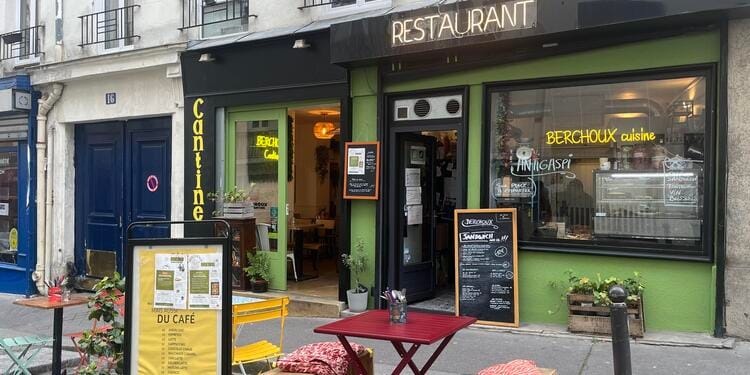
At 16 rue de la Fontaine du But, in the 18th arrondissement, Berchoux is a market canteen open at midday, minutes from Abbesses, Lamarck-Caulaincourt and the Sacré-Cœur. You lunch on real home cooking: seasonal bowls, a dish of the day that changes each midday, generous sandwiches on specialty bread, and home-made desserts to finish gently.
In the kitchen, Julie Berchoux brings to everyday lunch the rigour of thirty years in Michelin-starred cooking. The result is anything but stiff: a warm, village-like room, a simple welcome, quick service, and the belief that you can lunch very well on the Butte without losing your afternoon or your wallet. Eat in or takeaway, it's our answer to 'where to have lunch in Montmartre'.
Planning your lunch break on the Butte
A few habits turn an improvised lunch into a genuinely good break. Here's how to stack the odds in your favour.
Time it right
The heart of service is 12:30–1:30pm: arriving a little before or after avoids the rush and means a calmer meal, especially in warm weather.
Book if you can
Good neighbourhood tables are small and fill fast at midday. A quick call secures your spot and saves you wandering between full terraces.
Consider takeaway
If time is short or the sun is out, a bowl or sandwich to go tastes great on a bench, with the rooftops of Paris as a backdrop.
Together, these small moves make the difference between a lunch endured and a break you remember — the kind that makes you want to come back to the Butte.
What to do after lunch in Montmartre
A good lunch calls for a fine walk, and Montmartre is made for it. Once fed and rested, let the sloping lanes carry you: the north slope, around rue Lamarck and rue Caulaincourt, offers open views and a calm the touristy side has lost. It's the best moment to discover the Butte's true face, digestion permitting.
The highlights stay close: the Sacré-Cœur and its panoramic forecourt, place du Tertre and its painters, the Musée de Montmartre and its gardens, or the Clos Montmartre vineyard, the last in Paris. Taking your time after the meal, you'll dodge the midday crowd and enjoy softer early-afternoon light. A carrot cake or a coffee, and the walk can resume.
FAQ
FAQ about lunch in Montmartre
Where to have lunch in Montmartre without a tourist trap?
Step away from the big terraces around the Sacré-Cœur and place du Tertre, and look to the north-slope streets near Abbesses, Lamarck-Caulaincourt and Jules Joffrin. That's where the neighbourhood canteens and midday tables favoured by locals are.
How do I spot a good midday table on the Butte?
Trust a short menu, a changing daily chalkboard, an owned 'home-made' label and the presence of regulars. A kitchen tied to the morning market, with a renewed dish of the day, is almost always a good sign.
Which Montmartre area should I choose for lunch?
Abbesses for a lively, bohemian feel; Lamarck-Caulaincourt for a quiet, residential lunch; Jules Joffrin and rue de la Fontaine du But for a more authentic, cheaper neighbourhood Montmartre than the immediate surroundings of the Sacré-Cœur.
Can you have a vegetarian or flexitarian lunch in Montmartre?
Yes, more tables put vegetables at the centre of the plate. At Berchoux, the midday menu is flexitarian: seasonal vegetables, pulses and grains make up much of the dishes, and a fully vegetarian or vegan lunch is easily adapted.
Should I book for lunch in Montmartre?
It's strongly advised for small neighbourhood tables, especially in fine weather when midday fills fast. A quick call secures your spot and saves you a long search for a free terrace.
Can I take my lunch away and eat outside?
Absolutely. A composed bowl or a good sandwich travels easily for lunch on a bench, with a view over the rooftops of Paris. A great option when time is short or the sun invites you outdoors.
Going further
Ready to sit down on the Butte? Discover our déjeuner Montmartre offer and book your midday break at Berchoux, the 18th's market canteen.