Buffet catering in Paris: which eco-friendly caterer for a corporate event
Published on
A convivial buffet where guests help themselves, or a standing cocktail built on sharing bites? Before the format question comes a bigger one: the caterer. Here are the concrete criteria — starting with a real zero-waste approach — to decide with confidence in Paris.
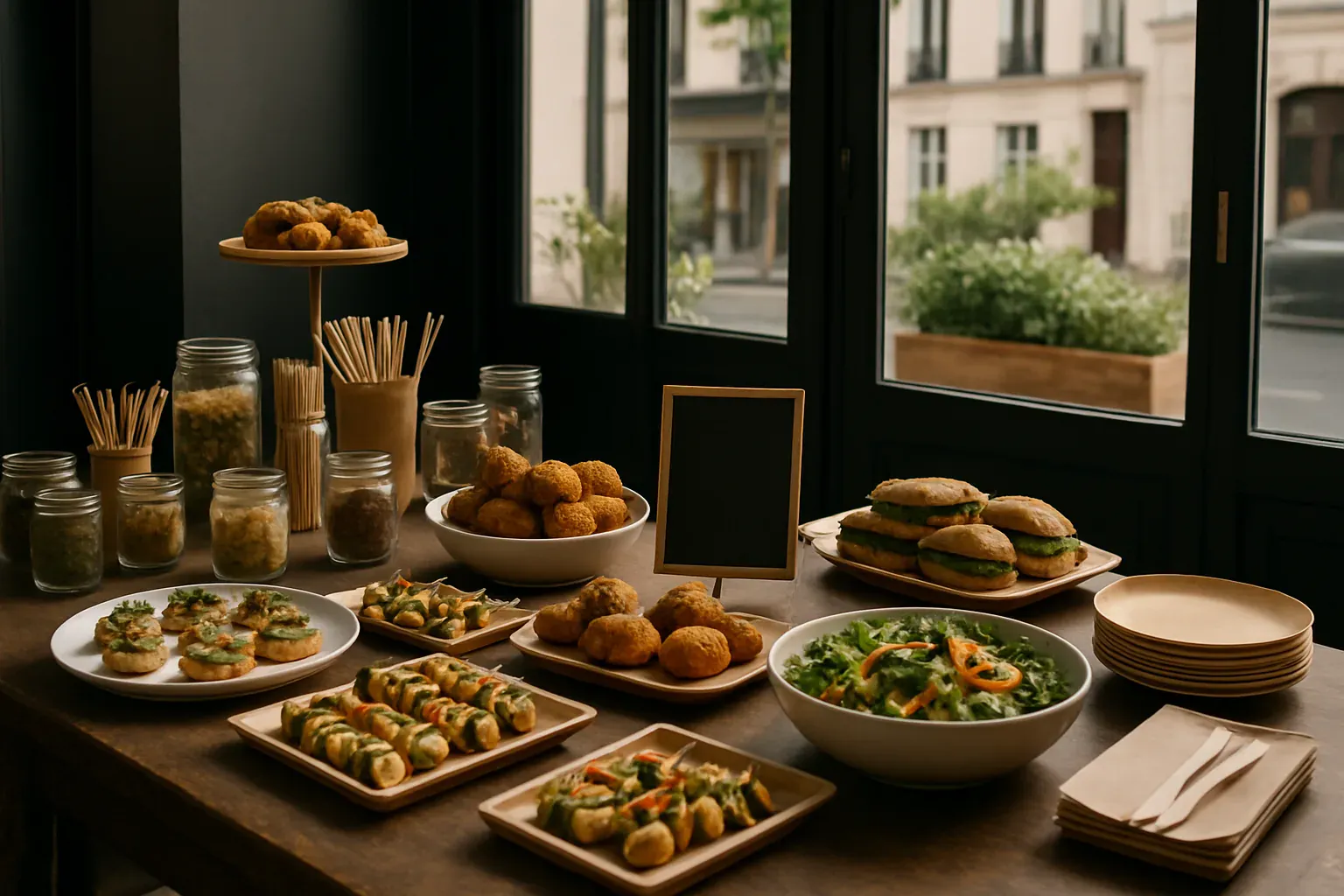
The essentials
For a corporate event in Paris, a buffet suits convivial lunches where guests build their own plate, while a standing cocktail of sharing bites keeps everyone mobile. The format follows from guest count, duration and available space — but the decisive criterion is the caterer. A genuinely eco-friendly caterer doesn't just talk: they cook from the morning market, turn unsold produce into the dish of the day, cut packaging and work raw produce on site rather than assembling industrial preparations. In Paris, favour a provider based near your venue: simpler logistics, more reliable delivery, lower footprint. Berchoux, a flexitarian, anti-waste table in Montmartre, has run this approach since opening in 2020 and builds buffets and cocktails in the same kitchen, across Paris and the near suburbs.
Buffet or standing cocktail: which format for which corporate event?
The buffet and the standing cocktail tell two different stories. One gathers guests around a generous table where each person builds their plate at their own pace; the other keeps them upright and mobile, glass in one hand and a sharing bite in the other. The first favours long conversations, the second circulation and encounters.
Three parameters drive the decision: how long your event lasts, the space you have, and the effect you want. A two-hour team lunch in a meeting room calls for a buffet. A product launch or an end-of-quarter afterwork, where guests need to move and mingle, calls for a standing cocktail. A seminar often takes both: a buffet at midday, sharing bites at the end of the day.
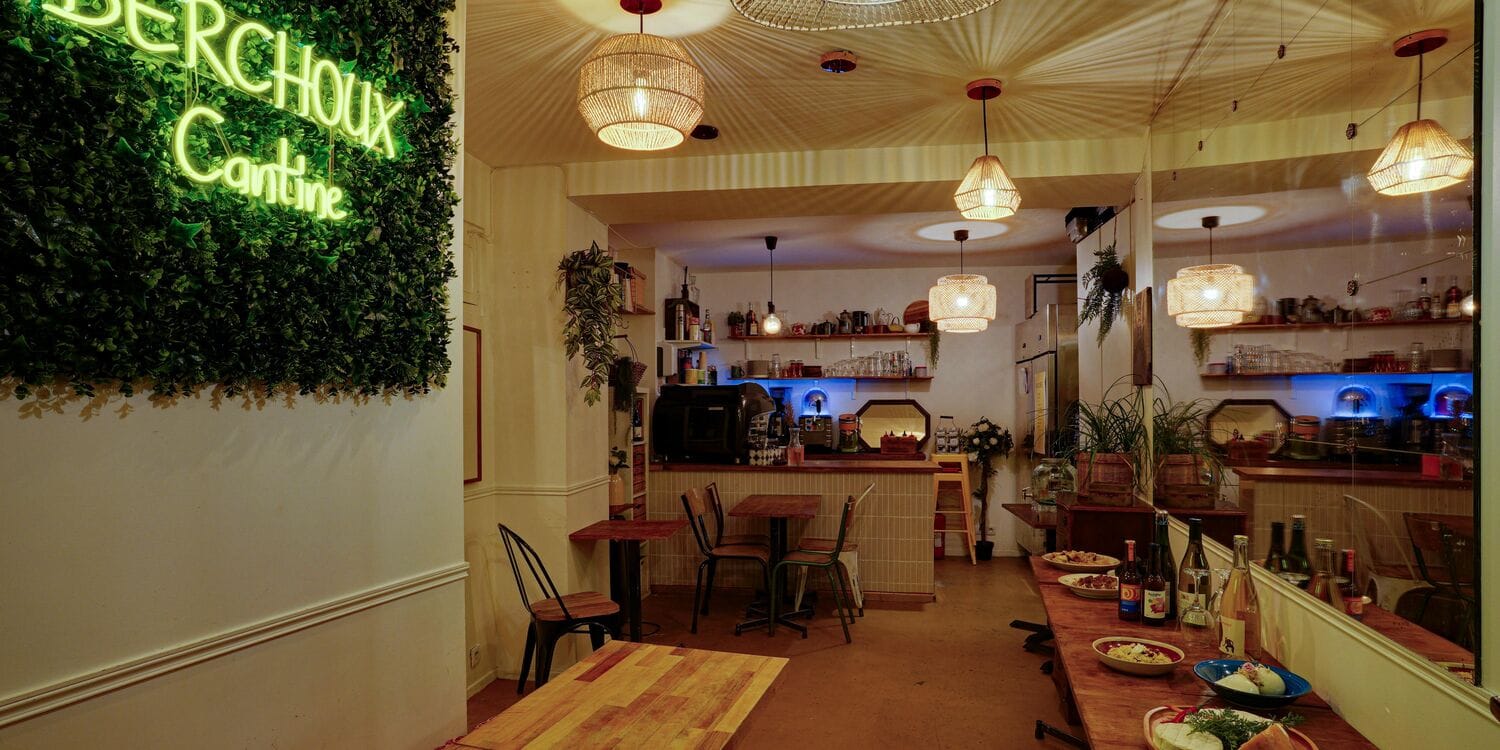
The buffet
Convivial and modular: dishes are laid out and everyone serves themselves. Ideal for a team lunch, a committee or an end-of-project meal where people sit down and talk. It allows generous portions and real variety, hot and cold.
The standing cocktail
Sharing bites designed to be eaten standing, without a knife and without filling both hands. Perfect for a launch, a private view, an afterwork or a company evening where circulation matters more than table comfort.
One point deserves emphasis: these are not two different trades. With a caterer who genuinely cooks, buffet and cocktail come out of the same kitchen, with the same produce and the same demand for freshness — only the presentation changes. If a provider offers a cocktail list utterly disconnected from their buffet cooking, the bites are often bought ready-made.
What makes a caterer genuinely eco-friendly and zero-waste?
The word appears on almost every Paris caterer's brochure. It costs nothing to write. What separates a real approach from marketing dressing are precise, verifiable habits that reshape a kitchen's daily routine — not a page of pledges on a website. Three pillars to examine.
The morning market
The menu is built from what the market offers that day, not the other way round. That demands real flexibility: no menu frozen for twelve months, no blind orders placed weeks ahead.
Surplus put to use
What wasn't served doesn't go in the bin: it becomes the next day's dish of the day. It is the most concrete anti-waste habit there is, and the easiest to verify with a single question.
Reduced packaging
Limited, reused containers, tupperware instead of disposable trays, specialty bread from a nearby bakery: the logic carries through to the table, not just in the back kitchen.
These habits share one thing: they are demanding. Cooking from the market means improvising; using surplus means rethinking the menu daily; cutting packaging means collecting equipment after the event. A caterer who really does it owns it and explains it. Berchoux has run this approach since opening in 2020, for corporate buffets as much as for lunch service in Montmartre.
Avoiding greenwashing: the questions that settle it
A polished green narrative can cover very ordinary practices. The good news: a handful of factual questions clears the doubt — and a sincere caterer answers them in seconds, without jargon.
Be wary of phrasing that commits to nothing: 'quality produce', 'careful selection', 'sustainable approach'. None of it says where produce comes from or what happens to what isn't eaten. A precise answer — a supplier's name, how often they buy, what an unserved dish becomes — is worth more than any label. A caterer rooted in their neighbourhood names their neighbours: at Berchoux, the specialty bread comes from Bun's Bakery, a few doors away.
Another overlooked signal: flexibility. A caterer who cooks from the market cannot guarantee an identical menu three months ahead — and will say so. One who sends an unchanging catalogue of forty year-round references is telling you, unintentionally, that their produce depends on no season at all.
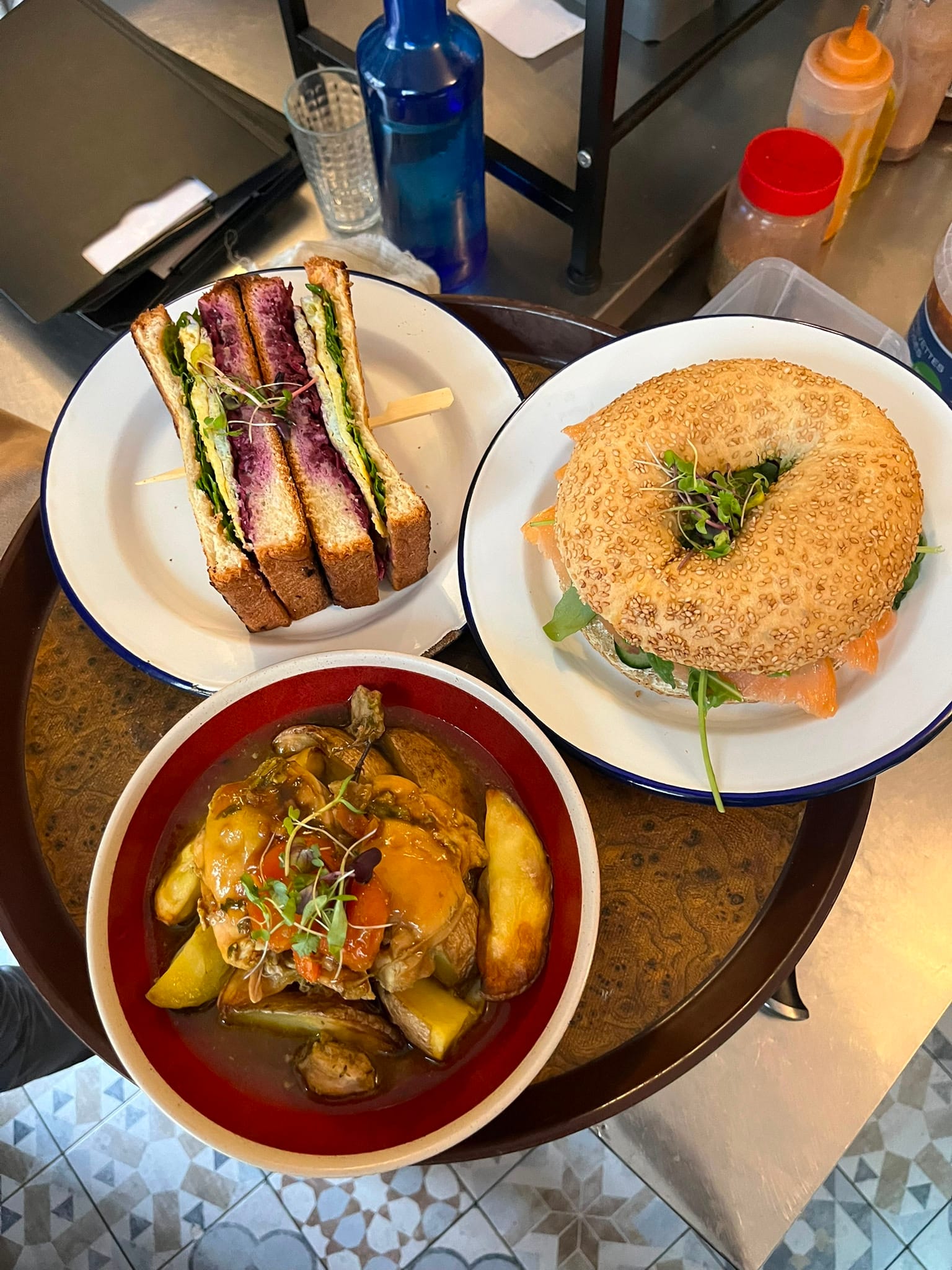
Questions to ask
- Where does the produce come from, and how often is it bought?
- What happens to what isn't served after an event?
- What is cooked on site, and what is bought ready-made?
- Does the offer change with the seasons?
- Are containers collected after the service?
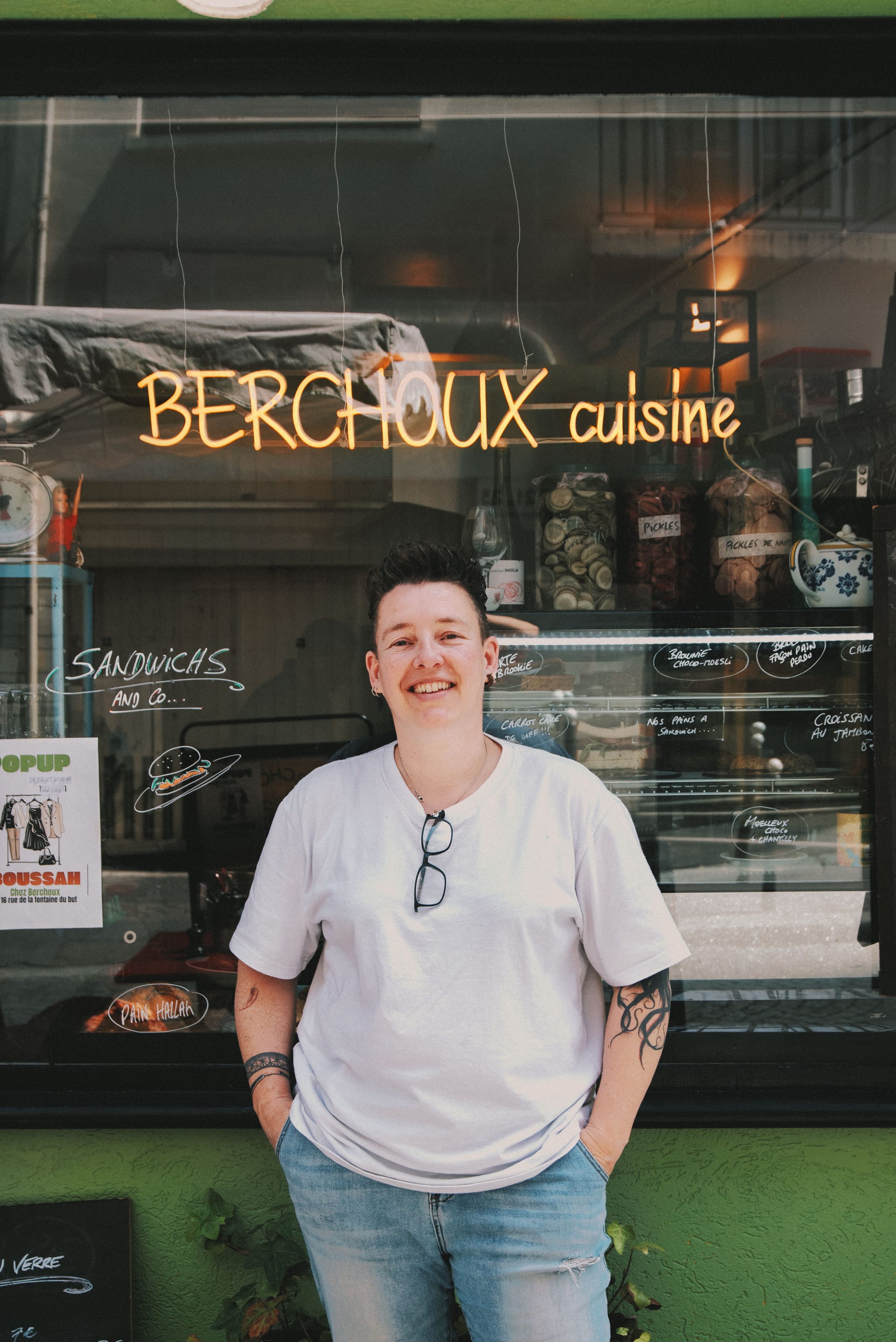
Home cooking or industrial catering: telling them apart
This is the most decisive criterion and, paradoxically, the hardest to read on a commercial proposal. Many so-called caterers are assemblers: they buy industrial preparations, plate them nicely and deliver. It shows at the table — uniform textures, standardised seasoning, no seasonality, and dishes identical to the provider next door.
A caterer who cooks starts from raw produce, cuts, cooks, seasons and tastes on site. Their offer follows deliveries and their dishes carry a recognisable signature. At Berchoux, everything is prepared at the restaurant by chef Julie Berchoux, who spent thirty years in Michelin-starred kitchens alongside houses such as Robuchon, Ducasse, Taillevent and Fauchon before opening her Montmartre canteen.
To check without being a professional, one shortcut works remarkably well: does the caterer also run a restaurant? If so, go and have lunch there. An hour at their table teaches you more than ten email exchanges, because you taste exactly what your guests will taste. Otherwise, ask what is cooked in house and what is outsourced — the precision of the answer is itself an answer.
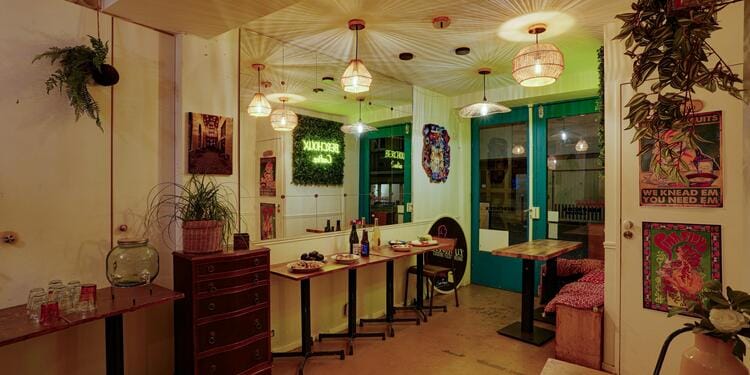
The morning market: what it changes in your buffet
Building a menu from the morning market isn't a romantic argument, it's an organisational constraint with concrete consequences. First, freshness: produce arrives the same day rather than sitting three days in cold storage. Second, seasonality, which follows mechanically from the first.
The third consequence matters most for a corporate event: buying day to day allows quantities to track the real guest count. When a caterer orders frozen batches weeks ahead, overproduction is built into the model — and leftovers are lost. When they buy in the morning for the same day, right-sizing becomes possible, and what little remains goes back to the kitchen rather than the bin.
In return, this means working with a caterer who composes with you rather than selling you a catalogue. You give the date, the guest count, the venue and your constraints, and the proposal is built around what's available. Many organisers find this more reassuring, because it rests on a conversation rather than a ticked box.
Organising in Paris: logistics, delivery area and venue
A caterer can have a remarkable kitchen and still be the wrong choice if logistics fall short. In Paris, distance is the first risk factor: traffic, impossible parking, a broken lift, a missed delivery slot. A provider near your venue delivers at the right temperature, on time, and can come back if something goes wrong.
Ask precisely about the area covered before going further. Berchoux, for instance, serves Paris and the near suburbs from its restaurant in the 18th arrondissement, in Montmartre, within roughly a 5 km radius: Paris 9, Pigalle, Batignolles, Clichy and Saint-Ouen fall within the usual zone. Local roots make delivery predictable — and cut the transport footprint.
Then review your venue's constraints with the caterer: is there unloading access, a lift, a water point, a surface to plate on? Does the delivery slot fit your team's schedule? Should equipment be collected at the end of the day, and when? These questions look trivial until they've been forgotten. An experienced caterer asks them spontaneously.
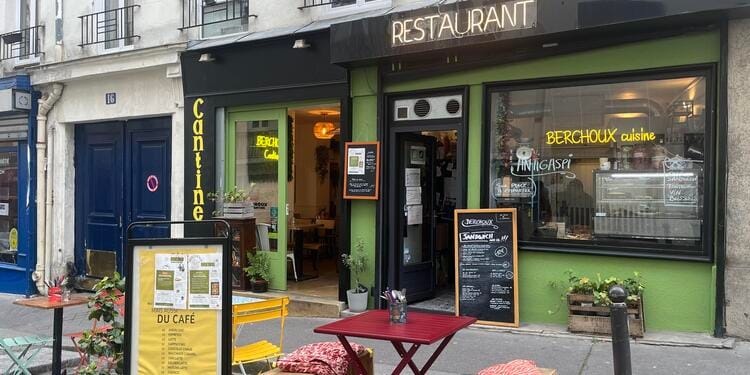
Guest count and right quantities: where zero waste is won
The most common question is also the worst framed: 'how much should we plan for?'. There is no universal figure — it depends on format, time of day and guest profile. A lunch buffet genuinely feeds people; an evening cocktail accompanies. Announcing a realistic rather than a cautious guest count is the most effective anti-waste move available to you as an organiser.
The 'just in case' reflex mechanically produces kilos of wasted food, and is often encouraged by providers who prefer to invoice wide rather than explain. A serious caterer helps you refine: exact time, duration, whether another meal is planned that day, whether guests will stay to the end. Then they propose a reasoned quantity, even if it means revising the figure down.
Anticipate real attendance too. For internal events, rarely does everyone registered show up; for client events, the gap can be wider still. Confirming the final number forty-eight hours ahead lets the caterer adjust their morning shopping. That is exactly where the anti-waste approach plays out: not in a brochure, but in a phone call two days before.
What sharpens the estimate
- The exact time and duration of the event
- The format: a filling buffet or accompanying bites
- The real attendance expected
- Whether another meal is planned that day
- Confirming the final number 48 hours ahead
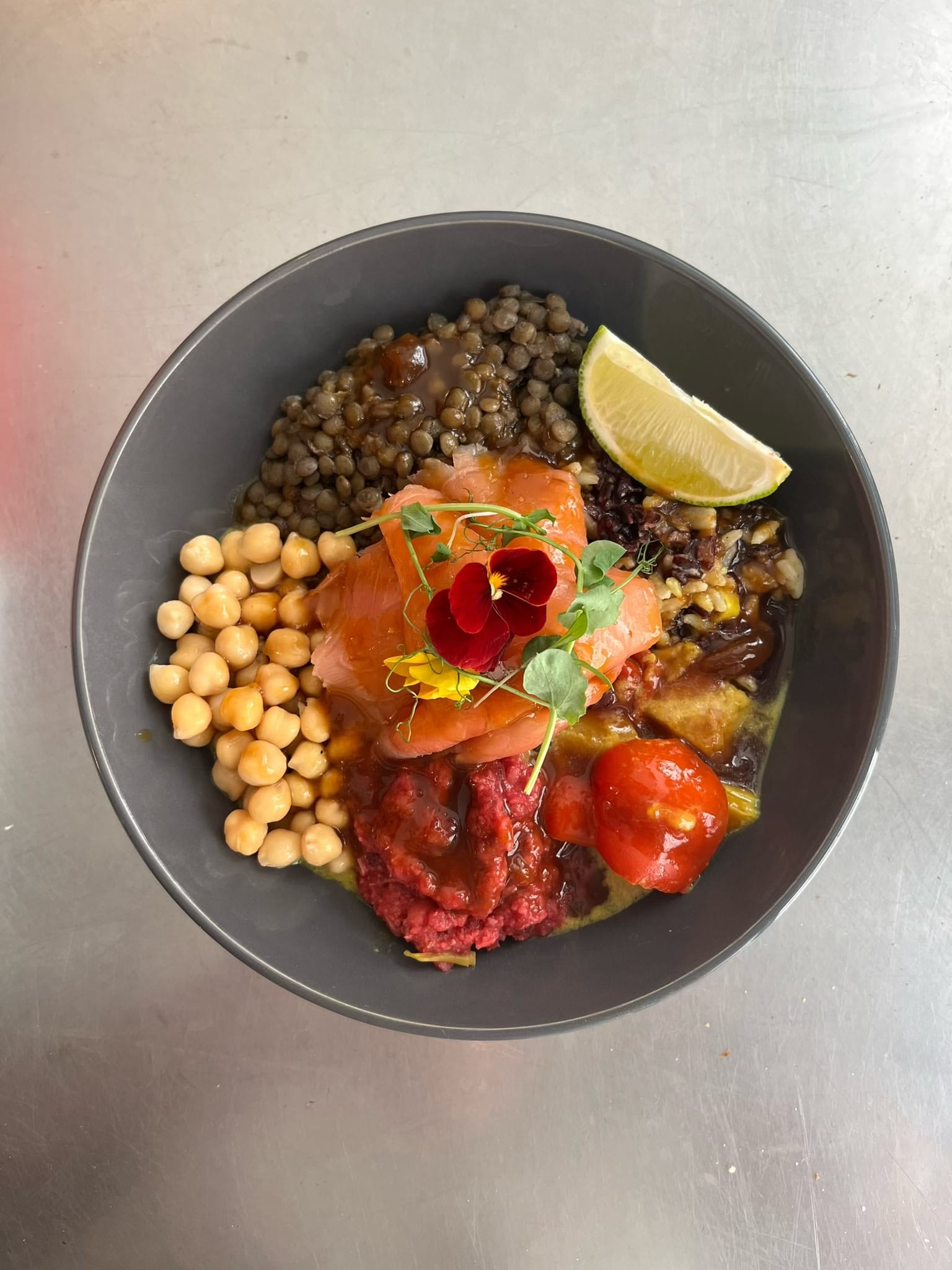
Flexitarian, vegetarian: everyone at the table
At a corporate event, dietary diversity is no longer an exception handled on the margins: vegetarians, flexitarians, intolerances and personal convictions share the same room. A caterer's ability to build a buffet where everyone has a place — without a sad fallback dish set aside — is a criterion in its own right.
The signal is simple: are the vegetarian options designed as dishes in their own right, or as a stripped-down version of the others? Flexitarian cooking answers this structurally, because vegetables lead and meat or fish accompany. That is the principle at Berchoux: plates are built around produce, and an entirely vegetarian buffet requires no contortion.
Also flag allergies in advance rather than on the day, and ask for dishes to be labelled when plated. A well-labelled buffet avoids hesitation, questions across the room and, above all, mistakes. It costs nothing and changes the experience for several of your guests.
Packaging, containers and end of service
This is the part nobody discusses during the sale and everyone remembers afterwards. The waste generated by a badly planned buffet is spectacular; by a well-planned one, almost negligible. Three points make the difference.
Containers
Reusable serving dishes and tupperware rather than disposable trays: the dishes leave with the caterer instead of filling your bins. Ask whether collection is included and when it is scheduled.
Over-packaging
Every bite individually wrapped, every sauce in its own pot: over-packaging is a symptom of industrial catering, not of hygiene. Careful plating beats plastic every time.
Leftovers
What happens to dishes left at the end? Taking them, sharing them among teams or returning them to the caterer to be used beats the default bin bag. Ask before, not after.
These choices are made at quote stage, not on the day. A caterer with a clear policy on containers and leftovers will present it spontaneously — and will most likely already have collection in their schedule.
The checklist before choosing your caterer in Paris
To sum up: the format — buffet or standing cocktail — follows from duration, space and the effect you want, and it is the simplest part of your decision. The real sorting happens on how the caterer works: where produce comes from, what they actually cook, what becomes of leftovers, and whether they can deliver to your street without losing three hours.
Finally, compare providers on equivalent terms: same guest count, same format, same services included. Two proposals that look alike can hide radically different realities — one with staff and equipment collection, the other a dry drop-off at the door. Aligning the scope is what makes the comparison honest, and that is usually when the decision becomes obvious.
To check before signing
- Does the format fit the duration and the space?
- Does the caterer cook on site, from raw produce?
- What happens to surplus and leftovers?
- Is my address within the delivery area?
- Are the vegetarian options real dishes?
- Is equipment collected after the event?
FAQ
Frequently asked questions about eco-friendly buffet catering in Paris
Buffet or standing cocktail: which one for a corporate event?
A buffet suits lunches and moments where guests sit down and take their time, each building their own plate. A standing cocktail, made of sharing bites eaten upright, suits launches, afterworks and evenings where circulation matters. Duration, available space and the desired effect almost always settle it.
Does an eco-friendly caterer cost more?
Not necessarily. Cooking from the morning market, matching quantities to the real guest count and reusing containers all reduce waste, and therefore volumes bought for nothing. What weighs on a proposal is far more often the level of service, on-site staff and the chosen format than the environmental approach itself.
How do I spot a genuinely zero-waste caterer?
Ask three factual questions: where the produce comes from and how often it is bought, what happens to what wasn't served, and whether containers are collected afterwards. A caterer who really practises this answers precisely — for instance, that surplus becomes the dish of the day. Vague answers are an answer in themselves.
Can a buffet be adapted to flexitarian and vegetarian diets?
Yes, and it is simpler with a caterer whose cooking is already flexitarian: vegetables lead, meat and fish accompany. An entirely vegetarian buffet then requires no improvisation. Flag allergies in advance and ask for dishes to be labelled when plated.
Which delivery area should I favour in Paris?
Choose a caterer close to your venue: delivery arrives at the right temperature, on time, and they can step in if something goes wrong. Berchoux serves Paris and the near suburbs from Montmartre, within roughly 5 km — Paris 9, Pigalle, Batignolles, Clichy and Saint-Ouen are part of the usual zone.
How far in advance should I book?
Get in touch a few days ahead to set the date, venue, format and a rough guest count; allow more time for a major event. Then confirm the final number around forty-eight hours before: that is what lets the caterer adjust their morning shopping and avoid overproduction.
Is equipment collected after the event?
With a caterer using reusable containers, collection is part of the service and should be planned at quote stage, with a precise time. Check this before signing: it separates a service designed end to end from a disposable-tray drop-off left on your hands.
Going further
You now know how to judge a provider: discover the buffet traiteur Paris offer from Berchoux, cooked the same morning in Montmartre and delivered across Paris.